
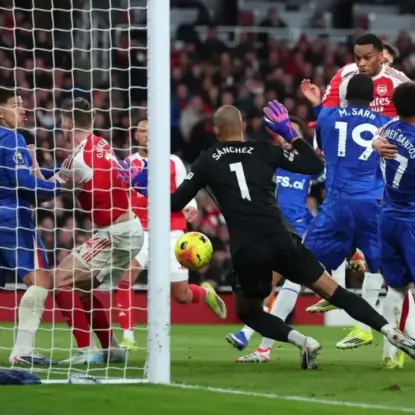
 As the Premier League continues to evolve tactically, discussions among fans and analysts have increasingly extended across digital sports communities where conversations sometimes intersect with platforms like Jeetbuzz App Download while debating whether set piece dominance is changing the character of English football. The 28th round of the league last weekend could easily be remembered as the most striking example yet of what many are calling the “corner kick round.” Liverpool’s 5–2 victory over West Ham featured a remarkable first half hat trick of goals from corner situations. Meanwhile the London derby between Arsenal and Chelsea produced three goals, all originating from corners. After the final whistles, coaches, commentators, and journalists all turned their attention to the same subject: the growing influence of set pieces.
Liverpool’s three corner goals in one half matched a rare Premier League moment previously seen only in September 2016 when Manchester United achieved the same feat against Leicester City. Since appointing a new set piece coach, Liverpool have scored nine goals from dead ball situations since January alone, triple the total they managed during the first four months of the season. The club has suddenly emerged as the Premier League’s new leader in this area. At the same time Arsenal continue to refine their own well known corner routines. In the clash with Chelsea, every goal came from a corner attack. That performance allowed Arsenal to equal the single season Premier League record of sixteen goals from corners, with many observers believing the record will soon be broken.
The statistics behind Arsenal’s efficiency are equally striking. The team has scored nine opening goals from corner kicks this season, matching the record set by Southampton during the 1994–95 campaign. Even more impressive, nine of those corner goals have become match winners, surpassing Manchester United’s previous Premier League record of eight during the 2012–13 season. Such numbers show how influential set pieces have become in determining results.
Despite the success, many coaches are not entirely comfortable with the trend. Chelsea manager Liam Rosenior expressed frustration after his team conceded twice from set pieces despite spending the entire week preparing defensive drills. Ironically, Liverpool manager Arne Slot, whose side benefited greatly from corner situations in their win over West Ham, admitted he is not a fan of the growing reliance on dead ball tactics. According to Slot, the “heart of football” lies in open play creativity similar to the flowing Barcelona teams of a decade ago. Everton manager David Moyes voiced a similar concern, arguing that excessive focus on set pieces sometimes makes matches resemble wrestling contests rather than flowing football.
Former Manchester City star Yaya Toure, now working as a television analyst for Sky Sports, openly criticized the decline in entertainment value. He explained that fans expect exciting passing combinations, dynamic attacks, and creative scoring chances. When a major derby produces three goals exclusively from corner kicks, it leaves many viewers unsatisfied. BBC commentator Chris Sutton echoed this sentiment, suggesting that if Arsenal eventually win the league while relying heavily on set pieces, critics might label them one of the least attractive champions in Premier League history.
Not everyone agrees with that criticism. Arsenal legend Patrick Vieira defended the team by emphasizing that winning remains the most important objective. Securing three points is ultimately what determines success in a league campaign. Even so, he acknowledged that supporters often expect Arsenal to play with greater flair, openness, and attacking imagination.
Across the broader football landscape, debate continues about whether the rising importance of set pieces could gradually reshape the identity of the Premier League. For decades the competition has been famous for its fast pace, intense physical battles, and unpredictable drama. Yet as teams devote increasing attention to set piece specialists, some observers fear the spectacle could slowly lose its spontaneity. Broadcast coverage has even begun to reflect this change, with cameras frequently focusing on set piece coaches celebrating goals instead of the managers on the touchline. As discussions about tactical evolution spread through global sports circles and online spaces such as Jeetbuzz App Download where fans share opinions on every aspect of the game, the question remains whether the Premier League can maintain its thrilling identity while adapting to modern strategic trends.